director's statement:
Contemporary Case Studies - an unromantic comedy, which merges fiction, experimental
and documentary forms.
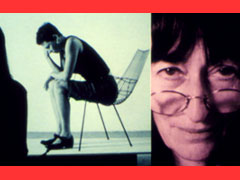
The visual style of Contemporary Case Studies is a further development of a style established in my past film and video work, utilising a graphic and witty design/shooting style to present black comedy material. In this film I am experimenting with a colourful, split screen layout, which references the 'duotone look' graphic design found in instructional films and interior design/furniture product catalogues from the 1960s. Rather than choosing a naturalistic setting, I constructed an artificial, showroom environment (a 'showroom of emotions') in which a diverse range of scenes are played out. The film aims to combine this experimental visual treatment with the representation of performance.
This script twists the 'romantic comedy' model, presenting a complex investigation into the struggles arising from the sexual politics, media pressures, the threat of disease and competitiveness between men and women, which now add increasing strains to relationships in the nineties, and into the new century. Interestingly enough, in the 1890s, many of these issues were also being debated, as the first reforms for women were being promoted.
The live action footage was shot on b/w 16mm by cinematographer Jackie Farkas. After editing the film on a digital system, I then returned to the original 16mm black and white material, and, using the Oxberry rostrum camera, refilmed the material, adding colourising, split screen, freeze frame and graphic effects on 35mm. My experience in animation and motion graphics/titles design equipped me with the expertise to achieve the graphic qualities found in Contemporary Case Studies.
The majority of the cast was non-professional, the performances imbued with a quality often found in documentary films. This counters the more stylised visual construction of the work. The script itself displays a deadpan, dry sense of humour. In several other of my short films/videos, I have explored the use of editing and contradictory action/context to create humour, rather than using devices such as jokes or comedic performance styles. The form of the film should expose the humour, rather than performances by 'comedians' as such.
The sound design features music by several Sydney sound artists. Digital tracks by Alice, Droszkhi and Minit complement the minimalist style of the film, and lend a bittersweet quality to many of the scenes.
Janet Merewether (Writer/Director)
May 2001
go to top